
SEC Climate Rule: The Final Act

What’s in this week’s newsletter:
The US SEC moves to rescind its climate disclosure rule.
European businesses issued the ‘Dublin Declaration’ calling for more EU deregulation.
Brazil shifts climate reporting to “comply or explain.”
The UK sets an ambitious new target to reduce emissions 87% by 2040.
The UN warns countries to prepare for a potential Super El Niño.
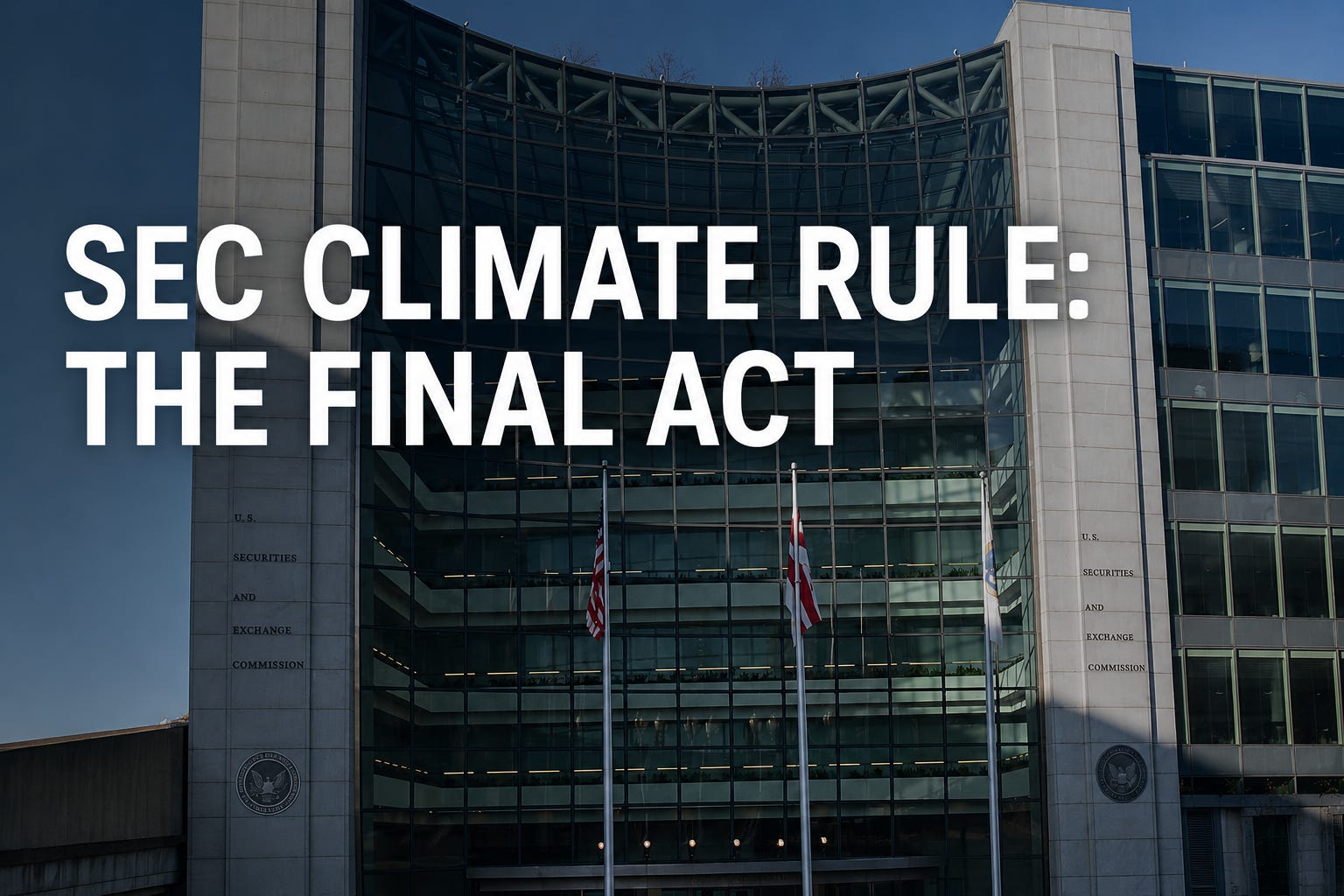
The US Securities and Exchange Commission (SEC) climate reporting rule has been a common thread running through this newsletter since it was proposed in 2023. That seems like a very long time ago now. There was great excitement back then when it looked like the world’s largest economy would incorporate material climate risk with financial disclosure.
This week, almost exactly 2 years to the day since the rule was approved, the conservative majority SEC issued the formal Rescission of Climate-Related Disclosure Rules. This was not a surprise since the SEC dropped its defense of the litigation on the rule, but the formal rescission marks the end of the road for this policy. The 134-page proposal spells out four main reasons why the SEC no longer believes the rules should be enacted:
The rule is outside of the remit of the SEC
Compliance would require undue cost and burden
The rule is inconsistent with the SEC’s materiality-based approach
The rule does not fit with the SEC’s current policy objectives
SEC Chair Paul Atkin, in a statement, said, “I have been concerned about the 2024 Climate Rules for some time because of questions raised about the Commission’s authority to adopt them and the soundness of the policy basis to support them.”
The rescission was welcomed by the plaintiffs who litigated against the rule. Mike Flood, of the US Chamber of Commerce, said, “The Chamber is encouraged that the SEC is returning to the core principle of materiality, allowing investors to gather crucial business information through corporate disclosure.”
However, much of the US investor community expressed deep disappointment in the rescission. Benjamin Schiffrin of Better Markets said the proposal will give investors less of the information they need to make decisions, adding that this “is antithetical to the SEC’s mission, which is supposed to be to protect investors.”
There is a 60-day comment period open now, and the rescission will be finalized in 2027.
But as the curtain closes on the SEC climate rule, regulations in other jurisdictions are on the rise. In just 10 weeks, the first reports will be filed under California’s emissions reporting rule (SB 253).
Given that California is the largest economy in the US (and 4th largest in the world), and its rules cover companies doing business in the state, thousands of US companies will be reporting essentially the same information required by the now defunct SEC rule.
And regulations requiring climate disclosure are coming on line in ~50 nations that are adopting the international climate standards from ISSB. In addition, the EU requirement to disclose climate emissions, risks, and other sustainability information applies to the 29 EU countries and companies doing business in those countries.
The message is clear: climate disclosure is a reality with or without the SEC rule.
2. Europe’s Deregulatory Dublin Declaration
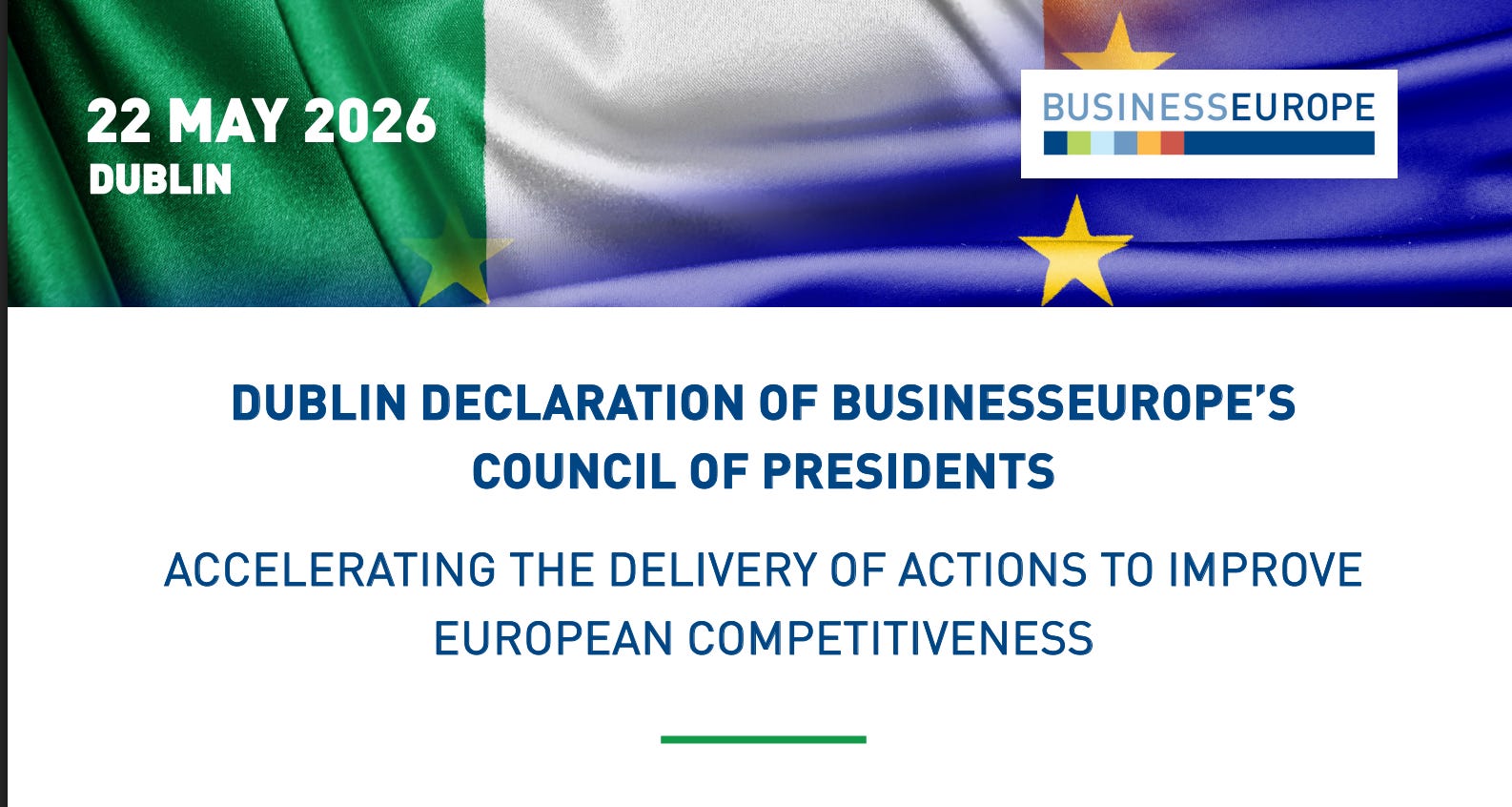
In a week when the European Commission issued an infringement notice to 20 member states for failing to transpose an anti-greenwashing directive, a business lobby coalition met in Ireland to announce the Dublin Declaration - a call for Europe to take more deregulatory action.
The Declaration includes six proposals aimed to improve EU competitiveness, including a moratorium on new rules and further reductions in the existing regulatory burden. The coalition claims that the deregulatory action through the recent ‘Omnibus’ processes “is not yet felt by companies.” They call for the withdrawal of the pending Green Claims Directive and for an adaptation of the EU Emissions Trading System (ETS) to account for competitiveness while maintaining environmental ambition.
A Swedish member of the EU Parliament, Jörgen Warborn, shared his support for the Declaration, calling it a “strong foundation.” Green MEP Kira Marie Peter-Hansen, on the other hand, claims that “Europe’s competitiveness issues are not solved by throwing the EU’s green legislation out the window.”
3. Brazil Climate Disclosure Becomes Voluntary
One year before Brazilian companies were required to provide climate reports aligned with the International Sustainability Standards Board (ISSB) climate standard, Brazil’s Securities and Exchange Commission (CVM) decided to move to a voluntary system.
Brazilian public companies will now have to report on a “comply or explain” basis - this means they can substitute an explanation for public climate disclosures. Companies that decide to continue climate reporting must do so for three consecutive years and maintain use of the ISSB standard. The CVM said these new rules “preserve transparency and comparability but restore the necessary respect for the freedom of entities to estimate the expected costs and benefits of their decisions on how to use investor resources.”
4. UK Doubles Down on Climate Despite Headwinds
Despite facing a backlash, the UK government has set one of its most ambitious emissions reduction targets to date.
There have been calls from former Prime Minister Tony Blair to abandon net zero and embrace North Sea oil and gas, and other political parties have vowed to completely scrap any climate policy. Ignoring these voices, the UK government announced a new target to reduce emissions by 87% from 1990 levels by 2040, aligning with recommendations from the UK’s independent Climate Change Committee.
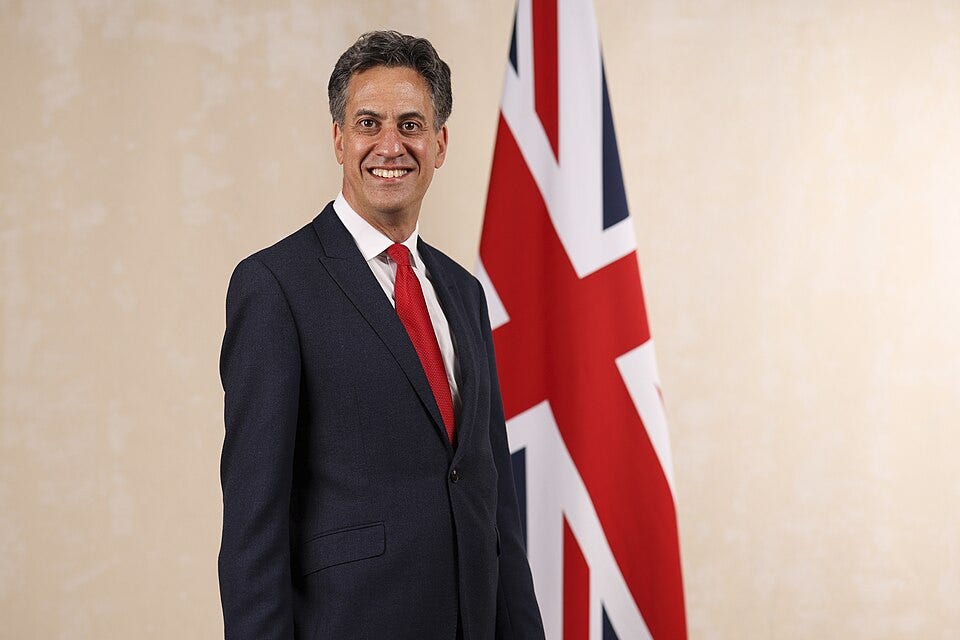
The announcement cited a new Confederation of British Industry (CBI) report released this week to back up its claim that Britain’s net zero target and progress toward it have been a “British success story.” The report found that the net zero economy is now worth £105bn a year and supports 1.1m jobs. British Energy Minister Ed Miliband said, “As Britain faces the second fossil fuel shock of the decade, the only way to protect family and business finances is to drive for clean homegrown power that we control.”
5. El Niño Preparedness
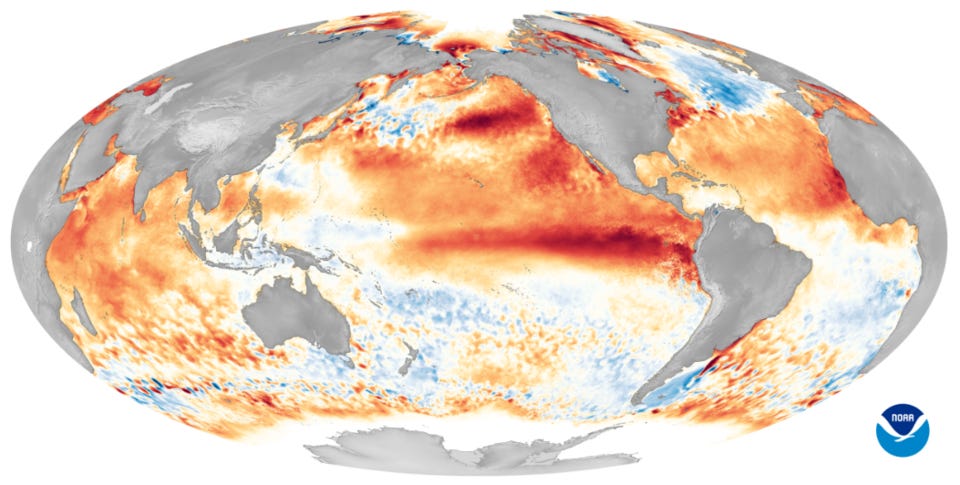
As evidence of a Super El Niño mounts, and most weather models are predicting a very strong event, the UN has warned countries to prepare.
The World Meteorological Organization (WMO) now puts an 80% probability that an at least moderate El Niño will begin by September. António Guterres, the UN Secretary General, said the world “must treat it as the urgent climate warning it is. El Niño conditions will pour fuel on the fire of a warming world.”
That prediction comes a week after the WMO said there is almost a certainty that a record-breaking hot year will occur before 2030, and a 75% chance that the 5-year period between 2026 and 2030 will be 1.5°C above the pre-industrial average. Gareth Redmond-King, from the Energy & Climate Intelligence Unit, “The havoc El Niño will wreak as it likely delivers another hottest year, in 2027, will be devastating for many farmers, and a question of life or death for far too many people.”
The views expressed on this website/weblog are mine alone and do not necessarily reflect the views of my employer.
Other Notable News:
Climate Litigation
Sustainable Funds
California Climate Policy
Trump 2.0
Global Weirding
Notable Podcasts:
The most recent edition of The Climate Rising podcast explores how a new AI technology can unlock geothermal energy. It features an interview with Joel Edwards, CTO of Zanskar, a company that reduces the risk and cost of discovering new geothermal resources by using AI to identify viable sites.
In this week’s edition of Pitching Progress from BCG’s Vinay Shandal is on the challenges of building sustainable supply chains. He speaks with EcoVadis Co-founder and Co-CEO Pierre-François Thaler, who explains why companies still need an in-depth view of their suppliers’ sustainability performance, even amid competing priorities such as geopolitics.
well done, Tim - very informative - thank you for sharing news and your insights.